
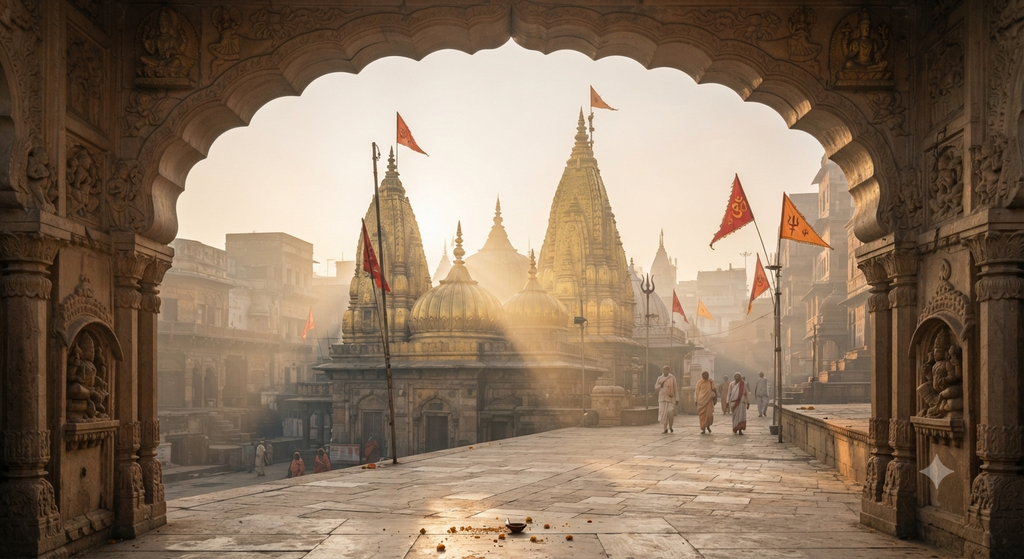
Nestled on the western banks of the sacred river Ganga in Uttar Pradesh, the Kashi Vishwanath Temple stands as one of the most revered spiritual landmarks in the world. Dedicated to Lord Shiva, it houses one of the twelve sacred Jyotirlingas—the supreme, radiant manifestations of cosmic light. For millennia, the city of Kashi (Varanasi) has been considered the eternal abode of Shiva, drawing millions of seekers, historians, and travelers looking to experience the timeless pulse of Indian heritage.
History and Resilience
The story of Kashi Vishwanath is a profound testament to endurance. Mentioned extensively in ancient texts like the Skanda Purana, the original structure has witnessed multiple invasions and destructions over the centuries.
Despite being repeatedly demolished by invading armies, the faith of the populace continually resurrected the shrine. The present-day temple structure owes its existence largely to Queen Ahilyabai Holkar of Indore, who rebuilt the temple adjacent to the site in 1780. Decades later, in 1835, Maharaja Ranjit Singh famously donated 800 kilograms of pure gold to plate the temple’s soaring twin spires, giving it the iconic golden shimmer that greets pilgrims from across the river today.
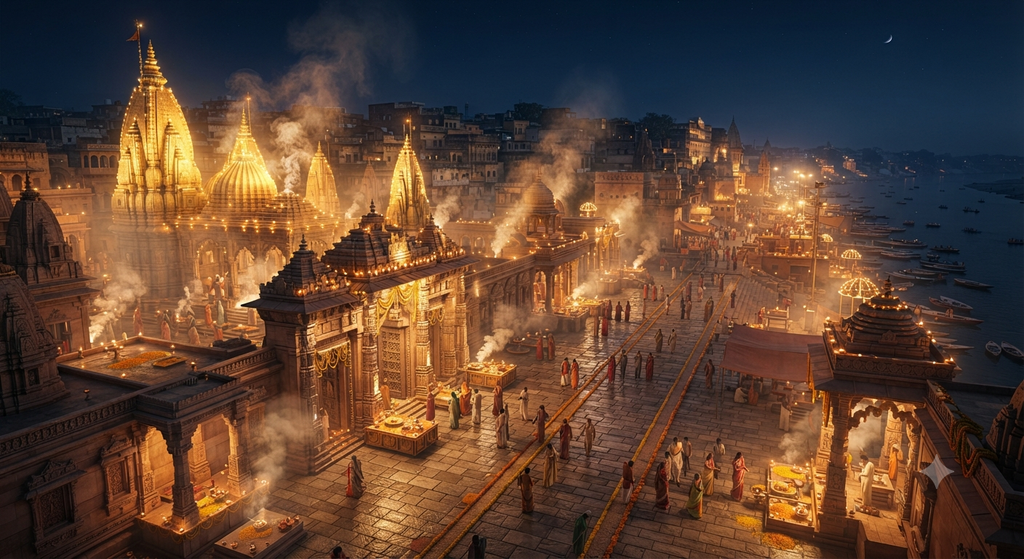
Architecture and the Modern Corridor Experience
The temple complex reflects classical North Indian Nagara architecture. At its center lies the sacred Garbhagriha (sanctum sanctorum), holding a compact, silver-altar-encased Shivalinga. The towering gold-plated domes and spires rise majestically above the dense skyline of the old city.
In recent years, the visitor experience underwent a historic evolution with the opening of the Kashi Vishwanath Corridor. Previously tucked away behind an impenetrable maze of ultra-tight alleys, a grand architectural pathway now links the holy sanctum directly to the banks of the Ganga at Lalita Ghat. This massive transformation allows pilgrims to take a holy morning dip in the river and walk through spacious, clean, and beautifully landscaped stone courtyards straight to the temple.
Essential Travel Logistics for Visitors
- Timings & Darshan: The temple opens early, with the most sought-after ritual being the pre-dawn Mangala Aarti at 3:00 AM. General darshan runs through the day, though peak hours see heavy lines.
- The “Sparsh” Privilege: Unlike many major shrines where you view deities from afar, Kashi Vishwanath permits Sparsh Darshan during specific morning and afternoon windows, allowing devotees to physically touch the sacred Jyotirlinga.
- Smart Planning: To bypass long standard queues, book a Sugam Darshan slot online ahead of time via the official temple trust portal.
- Dress Code & Etiquette: Dress modestly, covering shoulders and knees. Electronic items, large bags, and leather accessories are restricted at security checkpoints, so utilize the locker facilities available outside the complex.
Where to Stay and Dine Near the Temple
Staying near the Godowlia or Dasaswamedh Ghat areas puts you within walking distance of the corridor. Accommodations range from heritage boutique properties overlooking the river to comfortable budget hotels. While exploring the old town, don’t miss iconic local culinary traditions like piping-hot poori-sabzi breakfast and traditional Banarasi thandai.